
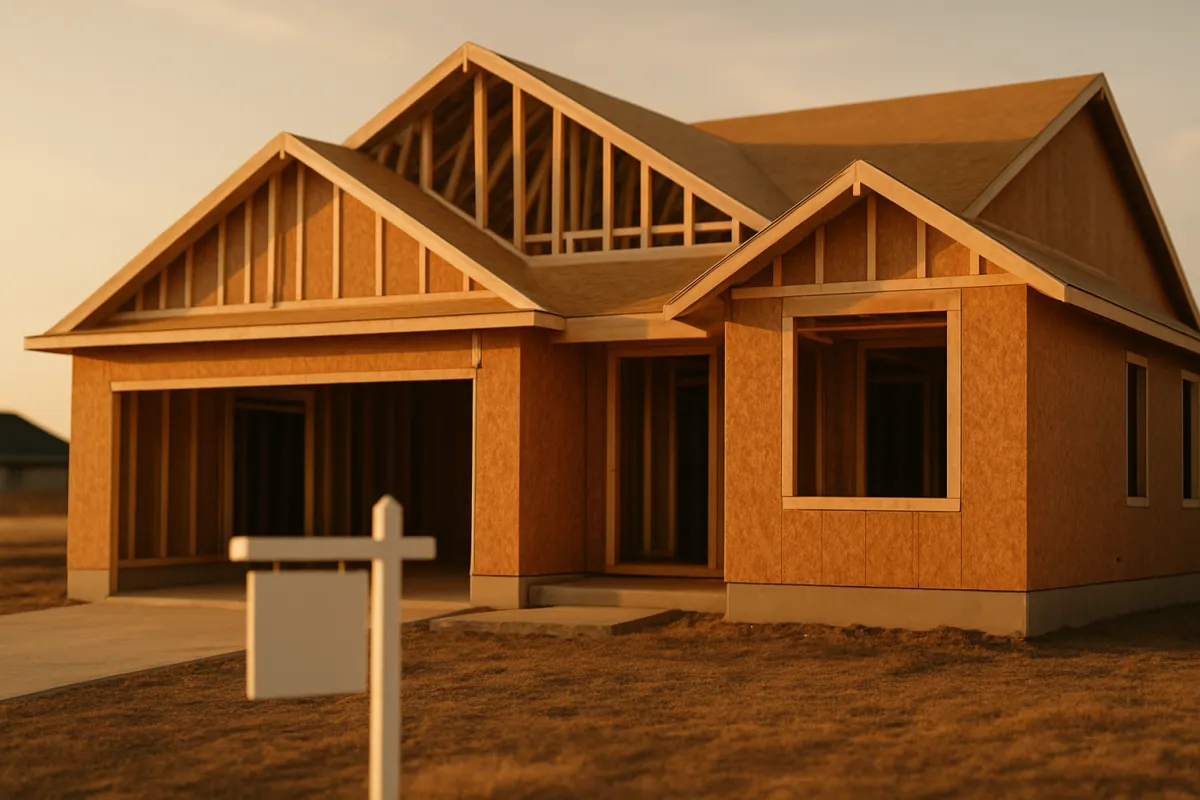
What's on this page
- What a construction loan actually is
- Construction-only vs construction-to-permanent (one-time close)
- How the draw schedule works
- Interest-only payments during the build
- What a lender needs before approving a construction loan
- The down payment construction lenders expect
- Credit score and reserves for a construction loan
- How the builder and the lender work together
- Draw inspections: who checks the work, and when
- Construction loan rates vs a standard mortgage rate
- Why construction loan rates behave the way they do
- What happens at the end of construction: the conversion
- A worked example: lot plus build, draw by draw
- What a construction loan costs, beyond the rate
- Land loans vs construction loans: the difference
- Construction loan requirements at a glance
- A worked comparison: one-time close vs two separate closings
- Common mistakes when financing new construction
- Troubleshooting a construction loan
- Shopping multiple construction lenders
- Your construction loan checklist
- The bottom line
Short answer: A construction loan pays your builder in stages as the home goes up, with interest commonly charged only on what has been drawn so far. A construction-to-permanent, one-time-close structure then converts automatically into a standard mortgage when the build finishes; a standalone construction loan instead requires a second closing into a separate permanent loan. Down payments commonly run 10 to 20 percent or more of the total project cost, and rates during the build typically sit above a standard mortgage rate. Confirm current terms with lenders, since construction lending is underwritten less uniformly than a purchase loan on an existing home.
A construction loan is the financing tool that lets you pay a builder before a house exists, and it works nothing like the mortgage you would use to buy a home that is already standing. Instead of handing the full loan amount to a seller at one closing, a construction lender releases money in stages, tied to how much of the house is actually built, and charges interest along the way on a balance that grows as the project does. By the end of this breakdown you will understand the draw process, what construction loans cost relative to a standard mortgage, the difference between a standalone construction loan and a one-time-close construction-to-permanent loan, and what actually happens the day your house is finished.
This matters because the two structures produce very different experiences and very different total costs. A standalone construction loan means a second application, a second appraisal, and a second round of closing costs once the home is done. A construction-to-permanent loan folds both phases into one loan and one closing, which is simpler and usually cheaper, when a lender offers it on terms that work for you. Price your own project with the construction loan companion on this page, and if you are also weighing whether the eventual mortgage will land you above the conforming limit, our jumbo loan breakdown covers what changes once a loan crosses that line.
Key takeaways
- A construction loan releases money in draws tied to building milestones, and interest commonly accrues only on the amount actually drawn so far.
- A construction-to-permanent, one-time-close loan automatically becomes a standard mortgage when the build finishes; a standalone construction loan needs a second closing into its own permanent loan.
- Down payments commonly run 10 to 20 percent or more of the total project cost (land plus the build), higher than many purchase-loan minimums on an existing home.
- Construction-phase rates typically run above a standard mortgage rate and are often variable, so the all-in cost depends heavily on the structure and lock option you choose.
- Draw inspections protect you and the lender by confirming claimed work is actually complete before the next disbursement goes out.
What a construction loan actually is
A construction loan is short-term financing built around a single fact: the home securing it does not exist yet. Because there is no finished, appraised property to lend against, a construction lender instead lends against a plan, a budget, and a builder, releasing funds as the work actually happens rather than all at once at a single closing. That structural difference drives everything else about the product, from how you are charged interest to how carefully the lender watches the build.
Where a purchase mortgage closes once and funds in full, a construction loan opens a line that gets drawn down over months as framing, roofing, and finishing work are completed and verified. The lender is managing a different kind of risk than it would on a standing home: cost overruns, delays, and a builder who does not finish are all construction-specific risks a finished-home mortgage never has to price in. Understanding the loan starts with accepting that it is a project-financing tool first, and a path to a mortgage second.

Construction-only vs construction-to-permanent (one-time close)
The first decision that shapes your entire project is which of two structures you use. A construction-only loan covers just the build: it funds the draws, charges interest along the way, and then comes due in full once construction is finished, at which point you must separately apply for and close a permanent mortgage to pay it off. That means two underwriting processes, two appraisals, and two sets of closing costs, one for the construction loan and a second for the permanent mortgage that replaces it.
A construction-to-permanent loan, commonly called a one-time close, combines both phases under a single approval. It funds the same draws during the build, but the moment construction finishes and the home passes final inspection, the loan automatically converts into a standard amortizing mortgage, with no new application, no second appraisal, and no second closing. The rate for the permanent phase may be locked at the original closing or set closer to conversion, depending on the lender’s program, but either way you avoid requalifying from scratch.
The practical difference is cost and certainty. A one-time close generally saves money by avoiding a second set of closing costs and removes the risk that your financial situation or the rate environment shifts unfavorably between the two closings a standalone structure would require. Not every lender offers one-time close financing, and those that do may have narrower builder or property requirements, so the first question to ask any construction lender is simply which structure they offer.
How the draw schedule works
Instead of funding the full loan at closing, a construction lender releases money in a series of draws, each tied to a milestone in the build: site preparation and the foundation, framing, enclosing the structure with roofing and windows, rough mechanical and electrical work, and finally interior finishes. The exact milestones and the share of the loan released at each one are spelled out in a draw schedule agreed to before construction starts, built around the builder’s own project timeline and budget.
Before releasing a draw, the lender typically sends an inspector, or reviews a report from one, to confirm the claimed work is genuinely complete and matches what the draw schedule calls for. This protects you from paying for work that was not actually done and protects the lender’s collateral, since the loan is only as good as the home actually being built on schedule. Draws are usually requested by the builder directly, often with your sign-off, and funds flow from the lender to the builder rather than through your own account.

Interest-only payments during the build
Most construction loans charge interest only during the building phase, and critically, only on the portion of the loan that has actually been drawn so far, not on the full approved amount. Early in a project, when only the foundation draw has gone out, your payment is small because little of the loan is outstanding. As framing, mechanical work, and finishes draw down more of the loan, the outstanding balance climbs and so does the interest-only payment, even though the rate itself has not changed.
This payment structure matters for budgeting, because it means your housing cost during construction starts low and rises through the project rather than arriving at a single, final number from day one. On an illustrative $450,000 project financed with 20 percent down, the construction loan is $360,000, and if that entire balance were drawn at once the interest-only payment at an illustrative rate would be well over $2,000 a month, but in practice early months see only a fraction of that because only a fraction of the loan has been disbursed. Run your own project cost and rate through the companion calculator on this page to see the fully drawn illustrative payment as an upper bound.
What a lender needs before approving a construction loan
Approving a construction loan means underwriting three things at once: you, the builder, and the project itself, which is more than a standard purchase mortgage asks for. On the personal side, expect the usual income, asset, and credit documentation, generally held to a somewhat higher bar than a purchase loan on an existing home because of the added construction risk. On the project side, lenders want detailed, itemized construction plans and a specific budget, not a rough estimate, along with evidence the numbers are realistic for the scope of work described.
The builder is underwritten almost as closely as you are. Lenders typically want to see a licensed, insured, and experienced builder with a track record of completed projects, sometimes requiring references or proof of past work, because a builder who cannot finish the job is one of the construction lender’s biggest risks. If you are acting as your own general contractor, many lenders will not approve the loan at all, or will apply much stricter conditions, since an inexperienced owner-builder raises the odds of delays, cost overruns, or work that fails inspection.

The down payment construction lenders expect
Construction loans commonly require a larger down payment than a purchase mortgage on an existing home, frequently in the 10 to 20 percent range of the total project cost, land and build combined, and sometimes higher depending on the lender and your credit profile. The bigger ask reflects the added risk of lending against a home that is not yet built, since the lender has less certainty about the eventual appraised value than it would financing a standing, inspected property.
If you already own the lot outright, many lenders will credit your existing equity in the land toward the down payment requirement, which can substantially reduce the new cash you need to bring to the project. If you are purchasing the land as part of the same transaction, the full purchase price of the lot typically counts as part of the total project cost the down payment percentage is measured against. Either way, confirm with your lender exactly how they are calculating the project cost and the required cash, since the mechanics vary more from lender to lender on a construction loan than on an ordinary purchase mortgage.
Credit score and reserves for a construction loan
Credit requirements on a construction loan tend to run above what a standard purchase mortgage asks for, commonly in the high 600s to low 700s, because the lender is pricing in the added uncertainty of a project that is not yet complete. Beyond the score itself, many construction lenders want to see cash reserves, liquid funds held back after the down payment, as a cushion against cost overruns or delays that could otherwise leave the project short of funds partway through.
Debt-to-income limits often run somewhat stricter as well, following the same logic as every other tightened requirement on a construction loan: with more uncertainty in the collateral, the lender wants more margin elsewhere in your file. Our note on the credit score needed to refinance covers how score bands generally map to pricing, and the same directional logic, a stronger score buying better terms, carries over to construction lending even though the specific thresholds differ.
How the builder and the lender work together
A construction loan is as much a relationship between the lender and the builder as it is between the lender and you, because the builder is the one actually requesting draws and performing the work the loan is paying for. Before the first draw, the lender typically vets the builder’s license, insurance, and track record, and the construction contract itself, covering the price, the timeline, and change-order procedures, becomes part of the loan file the lender monitors throughout the project.
Because the builder submits draw requests directly, a breakdown in that relationship, a builder falling behind schedule, performing substandard work, or disputing payment, can stall the loan itself, not just the construction timeline. This is why experienced construction lenders scrutinize the builder’s history so closely at the start: a strong, established builder with a track record of finishing comparable projects on budget is one of the best predictors that the loan will proceed smoothly from the first draw to the final conversion.
Draw inspections: who checks the work, and when
Every draw request is normally paired with an inspection, either a lender-ordered site visit or a review of photos and documentation, confirming the milestone claimed in the draw request genuinely matches what has been built. Inspections typically happen at each major stage, foundation, framing, mechanical rough-in, and final completion, though the exact schedule depends on the lender and the size of the project.
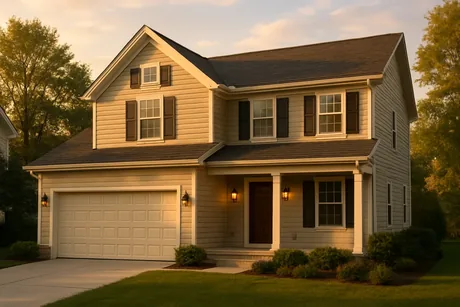
The inspection step exists to protect both sides: it stops the builder from being paid for work not yet done, and it stops you from unknowingly financing a project that has fallen behind its own schedule without anyone noticing. A failed or incomplete inspection simply delays the draw until the work catches up, which is inconvenient but far better than releasing funds for work that was never finished. Keep your own informal record of progress alongside the lender’s inspections, since discrepancies are easier to resolve quickly than after several draws have already gone out.
Construction loan rates vs a standard mortgage rate
Construction loan rates commonly run above a standard 30-year mortgage rate on an existing home, because the lender is financing a higher-risk, shorter-term project rather than an appraised, standing property. During the build, the rate is frequently variable, tied to an index that can move over the months construction is underway, which adds a layer of rate uncertainty on top of the usual construction risks.
Once a construction-to-permanent loan converts, the permanent-phase rate may already be locked from the original closing, or it may be set nearer to the conversion date depending on the specific program, so two loans with identical construction-phase pricing can land at very different all-in costs depending on that one structural detail. Our note on getting the best mortgage rate covers the general levers that move any mortgage rate, and they apply to the permanent phase of a construction-to-permanent loan as well. Always ask a construction lender precisely when and how the permanent rate is determined, since that answer changes the real cost comparison between lenders.
Illustrative rate relationship: construction phase vs a standard purchase mortgage
Illustrative relative rate levels, not a quote. Actual spreads move with the market and your lender.
The construction phase itself typically carries the highest rate of the three; the permanent phase after conversion tends to sit closer to, though often still above, a standard purchase rate. Illustrative only.
Why construction loan rates behave the way they do
The rate premium on a construction loan traces back to the same source as every other tightened term: uncertainty. A standard mortgage lends against a home a licensed appraiser has already inspected and valued, with comparable recent sales to support that value. A construction loan lends against a set of plans and a budget, with the eventual appraised value estimated rather than observed, and with real execution risk, delays, cost overruns, a builder who underperforms, sitting between approval and a finished, valuable home.
Because the lender is carrying that uncertainty for months rather than closing against a known asset immediately, it prices the construction phase accordingly, and often keeps the rate variable so it is not locked into today’s pricing for an extended, unpredictable timeline. Once the home is finished and inspected, much of that uncertainty disappears, which is part of why the permanent-phase rate on a one-time-close loan can sit closer to standard mortgage pricing than the construction-phase rate did.
What happens at the end of construction: the conversion
The finish line looks very different depending on which structure you chose at the start. On a construction-to-permanent, one-time-close loan, the conversion is automatic: once the home passes its final inspection and a certificate of occupancy is issued, the loan simply becomes a standard amortizing mortgage, typically a 30-year or other standard term, without a new application, a new appraisal, or a second closing. You begin making principal-and-interest payments on the full, now fully drawn balance from that point forward.
On a standalone, construction-only loan, finishing the home does not finish the loan. You must separately apply for, qualify for, and close a permanent mortgage sized to pay off the outstanding construction loan balance, which means a fresh underwriting review, typically a new appraisal of the now-completed home, and a second set of closing costs. If your financial situation, your credit, or the broader rate environment has shifted since the construction loan closed, that shift carries directly into the permanent loan’s terms, which is the core risk a one-time-close structure is designed to avoid.
A worked example: lot plus build, draw by draw
Walk through one illustrative project to see the pieces together. A buyer already owns a lot worth $90,000 free and clear and plans to build a home for a $360,000 construction budget, for a total illustrative project cost of $450,000. Using the lot’s equity plus a modest additional cash contribution to reach an illustrative 20 percent of the total project cost, $90,000, the construction loan itself is $360,000, a one-time-close structure chosen specifically to avoid a second closing.
During the build, the lender releases five draws tied to the foundation, framing, mechanical rough-in, exterior and roofing completion, and interior finishes, each confirmed by an inspection before funds go out. Early draws keep the interest-only payment modest, since little of the $360,000 has been disbursed, and the payment climbs through the project as more of the balance is drawn. Once the home passes final inspection roughly ten months later, the loan converts automatically into a 30-year mortgage on the full $360,000 balance, at the rate locked or set per the program’s terms, moving the family from interest-only construction payments into a standard amortizing mortgage payment with no second closing. The companion calculator on this page runs the same math on your own project cost, down payment, and rate.
What a construction loan costs, beyond the rate
The rate is only one piece of what a construction loan costs. Expect inspection fees for each draw, since the lender is paying someone to verify progress before releasing funds, along with the usual origination and underwriting fees a mortgage carries, sometimes at a higher dollar amount given the more complex underwriting a construction file requires. A one-time-close structure generally saves you the second full round of closing costs a standalone construction-to-permanent sequence would otherwise require, which is one of its clearest financial advantages.
Beyond lender fees, budget realistically for the construction project itself running over its original estimate, a common enough occurrence that experienced builders and lenders both plan for it. A contingency reserve, commonly cited in the range of 10 to 20 percent of the construction budget held back or available if needed, protects you from a shortfall partway through the build that could otherwise stall the project or force an unplanned, expensive change in financing. Our closing costs breakdown covers the fee families that apply broadly to any mortgage closing, construction included, even though a construction file layers its own specific costs on top.
Land loans vs construction loans: the difference
A land loan finances the purchase of a vacant lot on its own, with no construction plan or timeline attached, and it is a distinct product from a construction loan, which finances building on land you already own or are acquiring as part of the same transaction. Land loans commonly carry higher rates and larger down payment requirements than a construction loan, because raw land is harder to value and slower to sell than land with a home either built or actively being built on it.
If you already own land outright, you generally move straight into construction financing using the land as equity rather than needing a separate land loan at all. If you need to both buy land and then build, some lenders can combine the two into a single construction loan that includes the lot purchase in the total project cost, which is usually simpler and often cheaper than financing the land separately and then layering a construction loan on top. Ask prospective lenders directly whether they can finance the land and the build together before assuming you need two separate loans.
Construction loan requirements at a glance
Because construction underwriting examines you, the builder, and the project together, the requirements are broader than a standard purchase mortgage. The table below lines up the typical shape, read as a general pattern rather than a quote, since every lender sets its own specific thresholds.
| Requirement | Typical construction loan | Typical existing-home purchase loan |
|---|---|---|
| Down payment | 10 to 20 percent or more of project cost | As low as 3 to 5 percent on some programs |
| Credit score | Often high 600s to low 700s | Often mid-600s and up |
| Appraisal | Estimated future value, plan-based | Based on the existing, standing home |
| Disbursement | Staged draws tied to milestones | Full amount at a single closing |
| Builder review | Required: license, insurance, track record | Not applicable |
| Rate structure | Often variable during the build | Typically fixed for the full term |
| Closings | One (one-time close) or two (standalone) | One |
Treat every figure as illustrative and confirm current requirements with the specific lenders you approach, since construction lending varies by lender more than standard purchase financing does.
A worked comparison: one-time close vs two separate closings
Illustrative cash difference: one-time close vs two separate closings
Illustrative closing-cost share on a $360,000 construction loan converting to a $360,000 permanent mortgage. Not a quote.
A one-time-close structure folds the cost of two closings into one. Shares are illustrative, built to show the structural difference rather than a specific dollar figure.
Common mistakes when financing new construction
A short list of the errors that cost borrowers real money or real delays on a construction loan.
- Underestimating the total project cost. Leaving out site work, permits, or landscaping from the budget can leave the loan undersized partway through the build. Build a realistic, itemized budget before applying, not after.
- Choosing a standalone structure without comparing to one-time close. A second closing is real money; ask every lender whether a one-time-close option exists before assuming you need two.
- Hiring a builder the lender has not vetted well. A builder’s experience and financial stability directly affect whether the project finishes on time and on budget, which is the single biggest risk in construction lending.
- Skipping a contingency reserve. Construction projects commonly run over their original estimate; a reserve absorbs the overage without forcing an unplanned second loan or a stalled project.
- Assuming the construction-phase rate is the final rate. On a one-time-close loan, confirm exactly when and how the permanent rate is set, since that detail changes the real cost of the whole project.
- Acting as your own general contractor without confirming the lender allows it. Many lenders will not approve an owner-builder loan at all, or apply much stricter terms, so confirm this before you plan your project around it.
Every mistake on this list traces back to the same fix: treat a construction loan as a project to manage actively, with its own budget discipline and builder vetting, rather than as a mortgage you simply wait out.
Troubleshooting a construction loan
What if the project runs over budget? Talk to your lender immediately rather than letting a shortfall stall the build. Depending on the loan, options can include tapping a contingency reserve if one was set aside, a change order that adjusts the budget and the loan with lender approval, or in some cases additional cash from you to close the gap. The earlier you raise a shortfall, the more options remain available.
What if the builder falls behind schedule or underperforms? Document the issues in writing and raise them with your lender, since a builder’s failure to perform is a risk the lender shares with you on a construction loan. Depending on the contract and the lender’s policies, remedies can range from a formal notice to the builder to, in serious cases, replacing the builder, though that is a disruptive last resort that should be weighed carefully against simply working through delays.
What if a draw inspection fails? Treat it as useful information rather than a setback: the lender is confirming the work is not yet at the claimed milestone, which protects you from paying for unfinished work. Resolve the gap with the builder, request a re-inspection once it is addressed, and build in realistic buffer time for this kind of back-and-forth when planning your overall timeline.
Shopping multiple construction lenders
Construction lending is far less standardized than a conventional purchase mortgage, which makes shopping more than one lender genuinely worthwhile rather than a formality. One lender’s one-time-close program might convert at a rate locked from day one, while another sets the permanent rate near conversion, and that single structural difference can be worth more than a small gap in the headline construction rate. Draw schedules, inspection requirements, and how aggressively a lender credits owned land toward your down payment also vary enough from one shop to the next that two quotes on paper can translate into meaningfully different cash needs and total costs.
Ask each lender the same specific questions so the answers are comparable: which structure they offer, exactly when and how the permanent rate is set, how many draws the schedule allows and what triggers each one, what builder qualifications they require, and what reserves they expect you to hold back. A construction loan is a longer, more hands-on relationship than a typical mortgage closing, so the lender’s communication and responsiveness during the build matter nearly as much as the rate on the page, particularly if your project hits a snag that needs a quick answer rather than a slow one.
Your construction loan checklist
Work through these before and during your project.
- Build a detailed, itemized budget. Include the land, the full construction scope, permits, and a contingency reserve, not just the builder’s headline price.
- Compare one-time close against a standalone structure. Ask every lender directly which they offer and how the permanent-phase rate is determined.
- Vet your builder as carefully as the lender will. License, insurance, and a track record of finished, on-budget projects matter as much as your own credit file.
- Confirm the down payment calculation. Know whether owned land, a lot purchase, or cash alone is funding your contribution, and how the lender is measuring the total project cost.
- Understand the draw schedule before you start. Know the milestones, the inspection process, and roughly how your interest-only payment will grow through the build.
- Price the project with your real numbers. Run your total project cost, down payment, and rate through the companion calculator on this page to see both the construction-phase and converted payment.
- Ask what happens at the finish line. Confirm in writing whether your loan converts automatically or requires a second application and closing.
The bottom line
A construction loan finances a home that does not exist yet, releasing funds in draws as the build reaches real milestones and typically charging interest only on what has actually been disbursed. The single biggest decision is structural: a one-time-close construction-to-permanent loan converts automatically into a standard mortgage with no second closing, while a standalone construction loan requires you to separately qualify for and close a new permanent loan once the home is finished. Down payments commonly run higher than on a purchase mortgage for an existing home, rates during the build typically sit above standard mortgage pricing, and the builder’s own qualifications are underwritten almost as closely as yours. Budget for a contingency, vet your builder carefully, and confirm exactly how and when the permanent rate gets set before you choose a lender. Run your own project through the calculator and the companion above, and put the final decision in front of a licensed mortgage professional before you sign.
This breakdown is educational general information, not mortgage, financial, or legal advice, and RefiNook is not your lender or builder. Construction loan rates, down payment requirements, draw structures, and underwriting standards vary widely by lender and are not standardized the way conventional purchase mortgages are, so every percentage, rate, and dollar figure here is a round illustrative example chosen to show how a construction loan behaves, not a quote or a promise. Government-backed construction options such as FHA, VA, or USDA construction-to-permanent loans are offered by only some lenders and carry their own specific rules. Confirm current rates, requirements, and builder qualifications with a licensed mortgage professional and the lenders you approach before committing to a construction project.
Frequently asked questions
What is a construction loan and how does it work?
A construction loan is short-term financing that pays a builder in stages as a home gets built, rather than handing over the full amount at once the way a regular mortgage does. The lender releases money in draws tied to construction milestones, you generally pay interest only on what has actually been drawn, and once the home is finished the loan either gets paid off by a separate mortgage or automatically converts into one, depending on which structure you chose. The defining feature is that the lender is financing a house that does not exist yet, so the loan is priced and underwritten around that risk rather than around an appraised, finished property.
What is the difference between a construction loan and a construction-to-permanent loan?
A standalone construction loan covers only the building phase and must be paid off, usually by refinancing into a separate mortgage, once the home is complete, which means two closings and two sets of closing costs. A construction-to-permanent loan, often called a one-time close, combines both phases into a single loan: it funds the draws during the build exactly like a standalone construction loan, then automatically converts into a standard amortizing mortgage the moment construction finishes, with no second closing. The one-time-close structure is generally the cheaper and simpler path when a lender offers it, since you lock terms once and avoid requalifying and paying a second round of fees.
How much down payment do you need for a construction loan?
Construction loans commonly ask for a larger down payment than a typical mortgage on an existing home, frequently in the 10 to 20 percent range or more of the total project cost, which includes the land and the build budget together, not just the structure. The larger requirement reflects the added risk of financing a property that is not yet built and cannot be appraised the normal way. If you already own the land free and clear, many lenders will count your equity in it toward the down payment requirement, which can meaningfully reduce the new cash you need to bring. Exact minimums vary by lender and loan program, so treat any percentage here as illustrative and confirm the current requirement with lenders you approach.
Are construction loan rates higher than a regular mortgage rate?
Generally yes, because a construction loan is a short-term, higher-risk product for the lender, who is advancing money against a home that does not exist yet rather than an appraised, standing property. Rates on the construction phase commonly run above a standard 30-year mortgage rate, and they are frequently set as a variable rate tied to an index during the build. Once a construction-to-permanent loan converts, the permanent-phase rate may be locked at closing or set near conversion depending on the program, so the all-in cost depends heavily on which structure and lock option you choose. Compare quotes for the whole project, not just the headline construction-phase rate, since that number alone does not tell you what the permanent mortgage will cost.
How do draws work on a construction loan?
A draw is a partial disbursement of the loan released to the builder as construction reaches agreed milestones, such as completing the foundation, framing, or final finishes, rather than the full loan amount being paid out at closing. Before releasing each draw, the lender typically orders an inspection or a draw inspection report to confirm the work claimed is actually done, which protects both the lender and you from paying for unfinished work. Because only the drawn amount accrues interest on an interest-only construction loan, your payment during the build starts small and grows as more of the loan is disbursed, which is different from a regular mortgage where the full balance is outstanding from day one.
What happens to a construction loan when the house is finished?
What happens depends on which structure you chose at the start. With a construction-to-permanent, one-time-close loan, the loan automatically converts into a standard amortizing mortgage once the home passes final inspection and a certificate of occupancy is issued, with no new application or closing required. With a standalone, construction-only loan, you must apply for and close a separate permanent mortgage to pay off the construction loan, which means a second underwriting process, a second appraisal, and a second set of closing costs. Confirm which structure your lender is offering before you commit, since the difference changes both your total cost and how much paperwork you face at the finish line.
Can you get an FHA, VA, or USDA construction loan?
Government-backed construction-to-permanent options exist under FHA, VA, and USDA programs, generally following the same one-time-close logic as a conventional construction-to-permanent loan but layered with that program's own down payment, credit, and property rules. Availability varies significantly by lender, since not every lender that offers FHA, VA, or USDA purchase loans also offers the construction version, and the builder typically must meet program-specific requirements too. If a government-backed construction loan interests you, ask lenders directly whether they offer it, what their specific down payment and credit requirements are for that program, and confirm current rules before assuming any detail carries over unchanged from the standard purchase version of that loan.
What credit score do you need for a construction loan?
Construction lenders commonly look for a stronger credit profile than a standard mortgage requires, often in the high 600s to 700s range, because the loan carries more uncertainty than financing an already-built, appraised home. The exact minimum varies by lender and by whether the loan is a standalone construction loan or a construction-to-permanent structure, and some lenders layer additional requirements around reserves and the builder's own qualifications on top of your personal credit. A stronger score and healthy reserves can also influence your rate and how comfortable a lender is approving a larger loan-to-cost ratio. Confirm the specific minimum with lenders you approach, since construction underwriting is far less standardized than conventional purchase lending.

Hamza Hai is the editor of RefiNook. She holds an MBA and reviews the site's articles against our editorial standards, checking that every figure is labelled for what it is, that nothing is presented as verified fact without a source the reader can check, and that the writing stays useful to a non-specialist.